Industry Insights

    Warehouse Space Optimization Strategies for Taiwan Businesses

    Chen Wei
    September 25, 2024
    16 min read
    Maximizing Warehouse Space in Taiwan's Constrained Environment

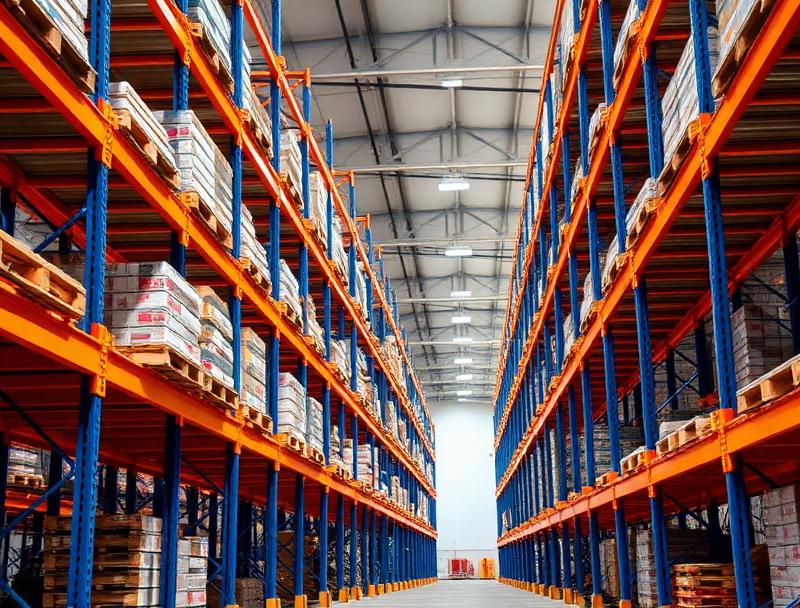
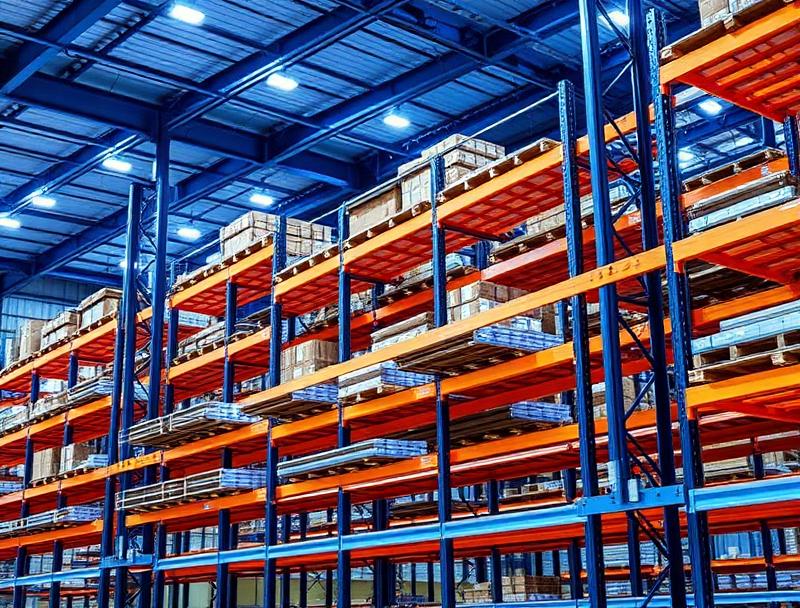
    With Taiwan’s limited land availability and industrial real estate costs among the highest in Asia, optimizing existing warehouse space has become a strategic imperative for business success. Whether you’re a manufacturer, distributor, or e-commerce fulfillment operator, the ability to maximize storage capacity within your current footprint can mean the difference between profitable growth and unsustainable expansion costs.
    Industrial land prices in Taiwan’s major industrial zones have increased by 40-60% over the past five years, with prime locations near ports and transportation hubs commanding premiums of NT$1 million or more per ping (approximately 3.3 square meters). For many Taiwan businesses, facility expansion is simply not a viable option—making space optimization not just desirable, but essential.

    Assessing Your Current Space Utilization

    Before implementing optimization strategies, it’s crucial to understand your current space utilization. Many warehouses operate at 50-60% of their potential capacity without realizing it. Key metrics to evaluate include:

    Cubic Utilization

    Most warehouses measure efficiency in square meters, but true efficiency is measured in cubic meters. The typical Taiwan warehouse with 6-meter clear height utilizes only 40-50% of available cubic space. The formula is simple:
    • Cubic Utilization = (Actual Storage Volume / Available Cubic Space) × 100
    • Available Cubic Space = Floor Area × Usable Height (typically clear height minus 0.5m for sprinklers and lighting)

    Floor Space Analysis

    Analyze how your floor space is allocated:
  1. Storage Area: What percentage of floor space is actually used for storage vs. aisles, staging, and empty space?
  2. Aisle Efficiency: Are aisle widths appropriate for the equipment used, or are they wider than necessary?
  3. Dead Zones: Are there areas of the warehouse that are underutilized due to layout inefficiencies?
  4. Inventory Velocity Analysis

    Understanding which products move quickly (A items) versus slowly (C items) is essential for optimizing both space and picking efficiency:
  5. A Items (Top 20% of SKUs, 80% of volume): Should be in prime, easily accessible locations
  6. B Items (Next 30% of SKUs, 15% of volume): Secondary locations with good accessibility
  7. C Items (Bottom 50% of SKUs, 5% of volume): Can be stored in high-density, less accessible systems
  8. Proven Space Optimization Strategies

    Strategy 1: Vertical Storage with AS/RS

    Automated Storage and Retrieval Systems represent the ultimate in vertical space utilization, reaching heights of 30-40 meters in purpose-built facilities:

    Unit Load AS/RS:

  9. Store palletized goods at heights impossible for conventional forklifts
  10. Typical installations in Taiwan range from 15-25 meters in height
  11. Storage density 3-4 times higher than conventional racking
  12. Particularly effective for slow-moving inventory that doesn't require frequent access
  13. Mini-Load AS/RS:

  14. Automated storage for totes, trays, and small cartons
  15. Perfect for e-commerce and parts distribution applications
  16. Heights typically 10-15 meters with very narrow aisles
  17. Storage densities of 200-400 totes per square meter of floor space
  18. Shuttle Systems:

  19. High-throughput systems with multiple shuttles per level
  20. Ideal for high-velocity items requiring frequent access
  21. Modular design allows phased implementation
  22. Strategy 2: Narrow Aisle (VNA) Operations

    Reducing aisle width is one of the most cost-effective ways to increase storage capacity:

    Aisle Width Comparison:

  23. Conventional Counterbalance Forklift: 3.5-4.0 meter aisles
  24. Reach Truck: 2.7-3.0 meter aisles (25% space savings)
  25. VNA Turret Truck: 1.6-1.8 meter aisles (50%+ space savings)
  26. Order Picker: 1.4-1.6 meter aisles for man-up applications
  27. Converting from conventional to VNA operations can increase storage capacity by 40-60% in the same footprint. The investment in specialized VNA equipment typically pays back within 2-3 years through avoided facility expansion costs.

    Strategy 3: Mobile Racking Systems

    Mobile racking eliminates wasted aisle space by mounting racking on powered carriages that move on floor-mounted rails:
  28. Space Increase: 80-100% more pallet positions compared to selective racking
  29. How It Works: Racks move apart to create a working aisle only where and when needed
  30. Best Applications: Cold storage (most common in Taiwan), archives, slow-moving inventory
  31. Considerations: Lower throughput than fixed racking, but excellent for space-constrained facilities with moderate access requirements
  32. For Taiwan’s many cold storage facilities, mobile racking is particularly valuable because it maximizes refrigerated space—the most expensive storage space to build and operate.

    Strategy 4: High-Density Pallet Storage

    When product velocity and variety allow, high-density pallet storage systems dramatically increase capacity:

    Drive-In/Drive-Through Racking:

  33. Forklifts drive directly into the rack structure
  34. Up to 10 pallets deep per lane
  35. 85% floor utilization (vs. 45% for selective racking)
  36. Best for large quantities of identical SKUs
  37. Push-Back Racking:

  38. Pallets stored on nested carts that push back on inclined rails
  39. 2-6 pallets deep with LIFO flow
  40. No forklift entry into rack structure (safer than drive-in)
  41. Good balance of density and selectivity
  42. Pallet Flow Racking:

  43. Gravity-fed system with pallets on roller conveyors
  44. FIFO flow—essential for date-sensitive products
  45. 5-20 pallets deep depending on application
  46. Common in food and beverage, pharmaceutical applications
  47. Strategy 5: Mezzanine and Multi-Level Structures

    Adding intermediate levels within existing building height creates new floor area without facility expansion:
  48. Structural Mezzanines: Free-standing platforms for storage or picking operations
  49. Rack-Supported Mezzanines: Integrate mezzanine floors with racking structures
  50. Multi-Tier Pick Modules: 2-4 levels of pick positions with integrated conveyor systems
  51. Typical Addition: 50-100% more usable floor space within existing building envelope
  52. Strategy 6: Optimized Slotting and Layout

    Sometimes significant space gains come from better organization rather than new equipment:
  53. ABC Velocity Slotting: Position fast-moving items in prime picking locations
  54. Product Affinity Analysis: Store frequently co-picked items near each other
  55. Seasonal Adjustments: Relocate inventory based on changing velocity patterns
  56. Right-Size Storage: Match storage location size to product cube (avoid storing small items in pallet positions)
  57. Case Study: Taiwan Electronics Manufacturer

    DepotFit recently helped a Taiwan electronics manufacturer triple their storage capacity in the same footprint:

    The Challenge

  58. 8,000 square meter warehouse with 8-meter clear height
  59. Conventional selective racking with counterbalance forklifts
  60. Operating at 95% capacity with no room for growth
  61. Facility expansion not possible due to location constraints
  62. The Solution

  63. Installed 18-meter AS/RS system for slow-moving inventory (C items)
  64. Converted remaining area to VNA operations with narrow-aisle reach trucks
  65. Implemented mobile racking for medium-velocity items in climate-controlled area
  66. Added mezzanine level for small parts storage and picking
  67. The Results

  68. Storage Capacity: Increased from 4,500 to 13,500 pallet positions (300% increase)
  69. Floor Space Efficiency: Improved from 45% to 82% utilization
  70. Cubic Utilization: Increased from 28% to 71%
  71. Labor Productivity: Picking efficiency improved 40% due to optimized slotting
  72. ROI: Full payback achieved in 28 months through avoided facility expansion
  73. Getting Started with Space Optimization

    DepotFit offers comprehensive space optimization services for Taiwan businesses:

    Free Warehouse Assessment

    Our engineers will visit your facility to evaluate current utilization and identify optimization opportunities. The assessment includes:
  74. Floor plan analysis and measurement
  75. Current storage system evaluation
  76. Inventory profile analysis
  77. Material flow and picking pattern review
  78. Preliminary recommendations and ROI estimates
  79. Detailed Optimization Study

    For facilities with significant optimization potential, we provide detailed studies including:
  80. 3D layout design and visualization
  81. Simulation modeling of proposed solutions
  82. Detailed cost-benefit analysis
  83. Implementation roadmap and phasing options
  84. Equipment specifications and vendor recommendations
  85. Take Action Today

    Don’t let space constraints limit your business growth. Contact DepotFit today to schedule your free warehouse assessment and discover the untapped potential in your Taiwan facility.
    With industrial real estate costs continuing to rise and facility expansion becoming increasingly difficult, space optimization is no longer optional—it’s essential for competitive success in Taiwan’s dynamic market.

    Share Article

    Keywords

    warehouse space optimization Taiwanstorage density TaiwanAS/RS TaiwanVNA operationsmobile racking Taiwan

    Need Warehouse Automation Solutions?

    Contact the DepotFit expert team for a free warehouse assessment and customized solutions.

    Ready to Optimize Your Warehouse?

    Get in touch with our experts for a customized solution

    Your global warehousing solution expert with 15+ years of experience, 3000+ product models, and a 28,000 m² manufacturing facility.
    Industrial Zone, Near Major Port
    Guangdong, China 518000
    © 2026 DepotFit. All rights reserved.